
Last updated November 15, 2026
 Sweep & inspection
 Caps & crowns
 Flue relining
 Masonry repair
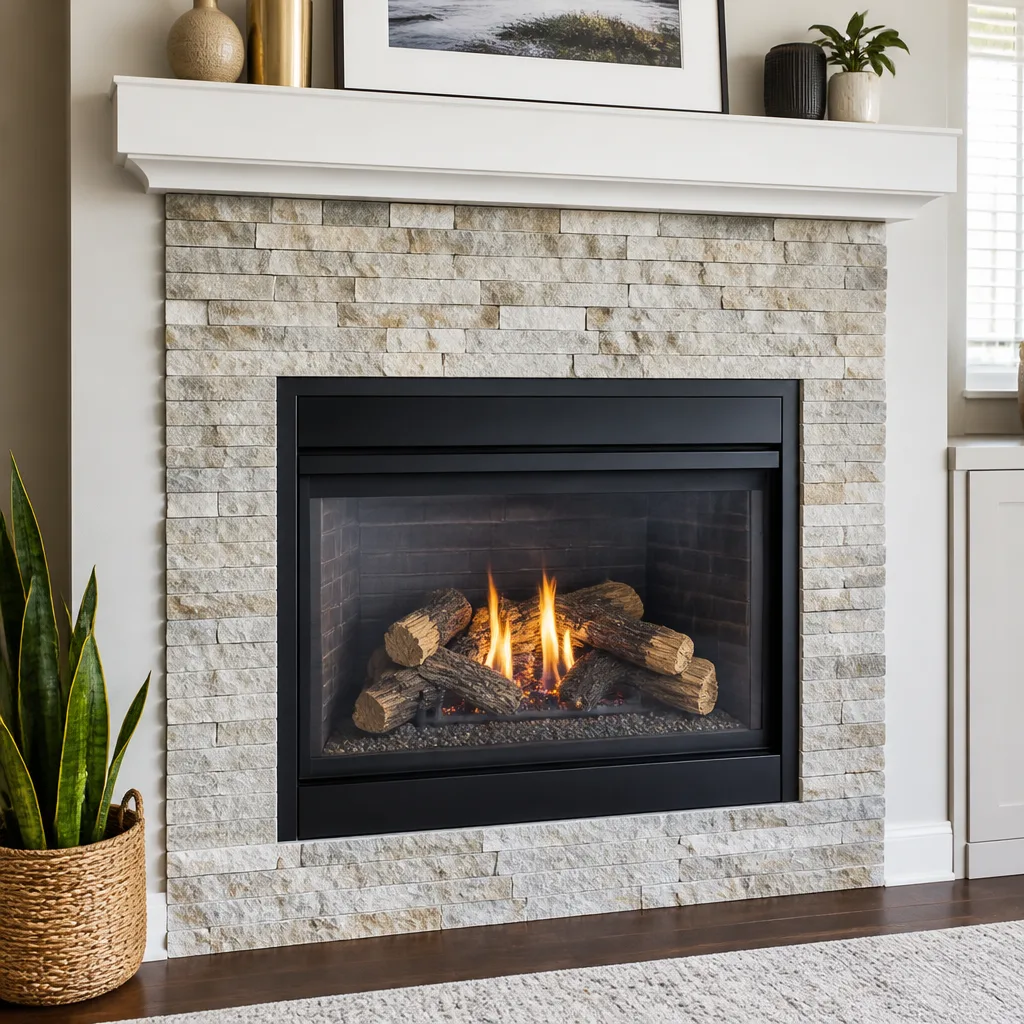 Gas fireplace service
Level 1 sweep and inspection to the NFPA 211 annual standard - flue, crown, cap, and flashing checked and photographed
Chimney sweep logs do not sweep chimneys. They loosen some creosote - which then falls where a brush and vacuum still have to collect it.
Chimney Sweep Maintenance Schedule: What to Do and When
The advice you’ll hear most often is “get your chimney swept once a year and you’re fine.” That single line has done more to confuse homeowners than almost anything else in this trade. An annual sweep is the floor of chimney care, not the ceiling. In Abilene, how often you actually need service depends on what you burn, how often you burn it, what your chimney is built from, and whether the system is old enough to have developed weaknesses nobody can see from the ground. This guide breaks chimney maintenance into four separate triggers – use, calendar, events, and age – and then lays out a month-by-month schedule you can hand to whoever services your chimney. By the end you’ll know exactly what to do, when to do it, and which tasks you should never skip.
Quick Answer
You should sweep your chimney based on how much you burn, not just once a year by default: most wood-burning households in Abilene need a sweep and inspection before the burning season and a visual check after it. If you burn more than a cord of mesquite or cedar a season, or notice heavy creosote buildup, you may need two cleanings per year. Systems over 20 years old should have a professional inspection annually even if you haven’t burned much.
The short version: use-based need comes first, calendar-based tasks come second, and events like a chimney fire override everything else. Age adds a fourth trigger, because older masonry and older liners degrade quietly.
Table of Contents
- The Four Triggers That Should Drive Your Schedule
- Mesquite, Cedar, and How Your Firewood Changes Cleaning Frequency
- Pre-Season Tasks: What to Do Before the First Fire
- Post-Winter Tasks and Abilene’s Freeze-Thaw Window
- The Invisible Parts: Cap, Crown, and Flashing
- Age-Based Milestones: Chimneys Over 20 Years Old
- Month-by-Month Reference Checklist
- Interior vs. Exterior Chimneys in West Texas Heat
The Four Triggers That Should Drive Your Schedule
Most checklist articles treat chimney maintenance as one thing. It isn’t. We’ve found it’s more useful to think in four separate categories, because each one fires on a different schedule and each one catches problems the others miss.
Use-based. This is the big one. The National Fire Protection Association standard calls for annual inspection, but annual doesn’t mean “once a year regardless of how much you burn.” A homeowner who lights a fire 15 times a season and one who burns three cords of wood are not in the same situation. A quarter-inch or more of creosote buildup in your flue is the point at which most chimney sweeps recommend cleaning, and how fast you get there is a function of fuel, airflow, and burn habits. Track how many cords you burn in a season. Most households in Abilene that heat primarily with wood fall between one and three cords.
Calendar-based. Some tasks don’t depend on how much you burned – they depend on the seasons. A pre-season sweep before the first cold night, and a post-season inspection after the last fire, clear the two bookends. A visual exterior check in late spring and early fall catches damage before it worsens.
Event-based. A chimney fire, a lightning strike near the flue, a hail-driven crack in the crown, or a strong storm that knocks a cap loose all reset the schedule. After any of these, get an inspection – regardless of when your last one was.
Age-based. A chimney is a system with components that age. Masonry mortar softens over decades. Clay tile liners crack. Metal liners can corrode where moisture lingers. Once a system crosses the twenty-year mark, an annual professional inspection is not optional, even if the homeowner barely burns.
If you’re looking for a single place to start, the best first call for most homeowners is a scheduled chimney sweep paired with an inspection, done before the season rather than in the middle of a cold snap. The smoke-check and camera inspection surface what the sweep removes. A sweep without an inspection is a guess.
Mesquite, Cedar, and How Your Firewood Changes Cleaning Frequency
The single biggest variable most generic maintenance guides ignore is what you’re actually burning. In Abilene, the practical firewood choices are mesquite, cedar, oak, pecan, and manufactured logs – and each one produces creosote at a different rate, and each one coats your flue with a different kind of residue.
Mesquite
Mesquite is the local favorite for good reason: dense, long-burning, high heat output. It also produces creosote faster per cord than most Eastern hardwoods because it burns hot and fast relative to its mass and produces a lot of volatiles that condense on the cooler upper flue before they can be burned off. Mesquite-heavy burners should plan on a mid-season sweep on top of the pre-season one. We’ve seen flues go from clean to a visible layer of glaze in a single heavy-burning winter.
Cedar
Cedar is the opposite problem. It ignites easily, burns hot, and dries fast – which means it’s great kindling but a poor primary fuel if your goal is a clean flue. Cedar produces a thinner, more powdery creosote that doesn’t glaze as quickly as mesquite, but it also produces a lot of ash and looser soot. Flues burning primarily cedar should be swept at least once a season, and the firebox benefits from an ash sweep too.
Oak and Pecan
Oak and pecan are the “kindest” fuels locally in terms of creosote production, assuming they’re properly seasoned. Oak needs at least a full season to dry, and unseasoned oak is worse for your flue than anything else on this list because the moisture content drops flue gas temperature and encourages condensation.
Manufactured Logs
Manufactured logs burn consistently and produce less creosote than raw wood, but they can leave a sticky residue in the flue that sweetens with age. A house burning primarily manufactured logs may still need an annual sweep, just not a mid-season one.
The practical rule: the hotter and drier your fuel, the more often you need to look. If you’re burning a mix, watch the flue top for brown or black staining – both indicate that you’re running a cooler, smokier fire than you should. When you call for service, tell the technician what you’re burning. Any honest chimney repair conversation starts with that information.
Pre-Season Tasks: What to Do Before the First Fire
The pre-season window in Abilene is short. The first genuinely cold night usually lands somewhere between late October and early December, and the good weather for chimney work – dry, mild, not yet sweltering – runs from roughly late September to mid-November. Use that window.
- Schedule the sweep and inspection together. A professional sweep clears soot and creosote from the flue; the inspection checks what the sweep can’t reach with a brush – the interior of the liner, joints, and the smoke chamber. Doing them together means findings are actionable on the same visit rather than generating a report with no follow-through.
- Check your firewood. Stacking your wood in the off-season is right. Burning it before it’s dry is wrong. Properly seasoned wood registers roughly 15-20% moisture on a meter. If you don’t have a meter, look for checking (cracks) on the end grain and a hollow sound when you clap two pieces together.
- Look at the firebox. Cracks in firebrick are common after a Texas summer. Small hairline cracks are normal; larger ones or missing brick need repair attention before the season starts.
- Test the damper. The damper should open and close freely. A damper stuck partially closed is one of the most common causes of smoky, inefficient fires.
- Walk the exterior. From the ground, look at the cap, crown, and visible flashing. Any missing cap, cracked crown, or displaced flashing wants a look before winter rains arrive.
- Confirm your smoke and carbon monoxide detectors. This isn’t chimney maintenance strictly, but it’s the safety net that catches problems you didn’t detect any other way.
Do the pre-season tasks in order. The sweep comes first because everything downstream – the inspection, the repair recommendations, your assessment of whether you can safely burn this winter – depends on a clean flue and an honest read of its condition.
Post-Winter Tasks and Abilene’s Freeze-Thaw Window
Winter in West Texas is mild, but “mild” doesn’t mean “gentle” to masonry. The freeze-thaw window here usually runs from December into February. When daytime highs bounce above freezing and night temperatures dip below it, water that has worked its way into mortar joints, crowns, and flashing detail expands and contracts with the temperature. Each cycle opens cracks a little wider. By the time spring arrives, damage that looked like a hairline crack in October can be a visible fissure.
Post-winter tasks should be scheduled to catch that damage before the summer heat bakes it in:
- Walk the exterior after the last hard cold snap. Look for new cracks in the crown, missing mortar at the joint where the chimney meets the roofline, spalling brick on the chimney column, and any staining where the flashing meets the shingles.
- Have the flue inspected. The freeze-thaw window is when clay tile liners commonly crack. A camera inspection will show the interior of the flue, including areas the summer sweep can’t see.
- Clean the firebox and ash pit. Ash left sitting over the summer holds moisture and can accelerate corrosion of the firebox floor and grate hardware.
- Close the damper and seal the flue. A closed damper reduces the amount of outside air that migrates into the house during the hot months, and it keeps birds and insects from exploring.
- Check the cap again. A cap that survived the winter intact is good news. A cap that rattled loose during a windstorm needs to be reattached or replaced before it becomes a way for water to enter.
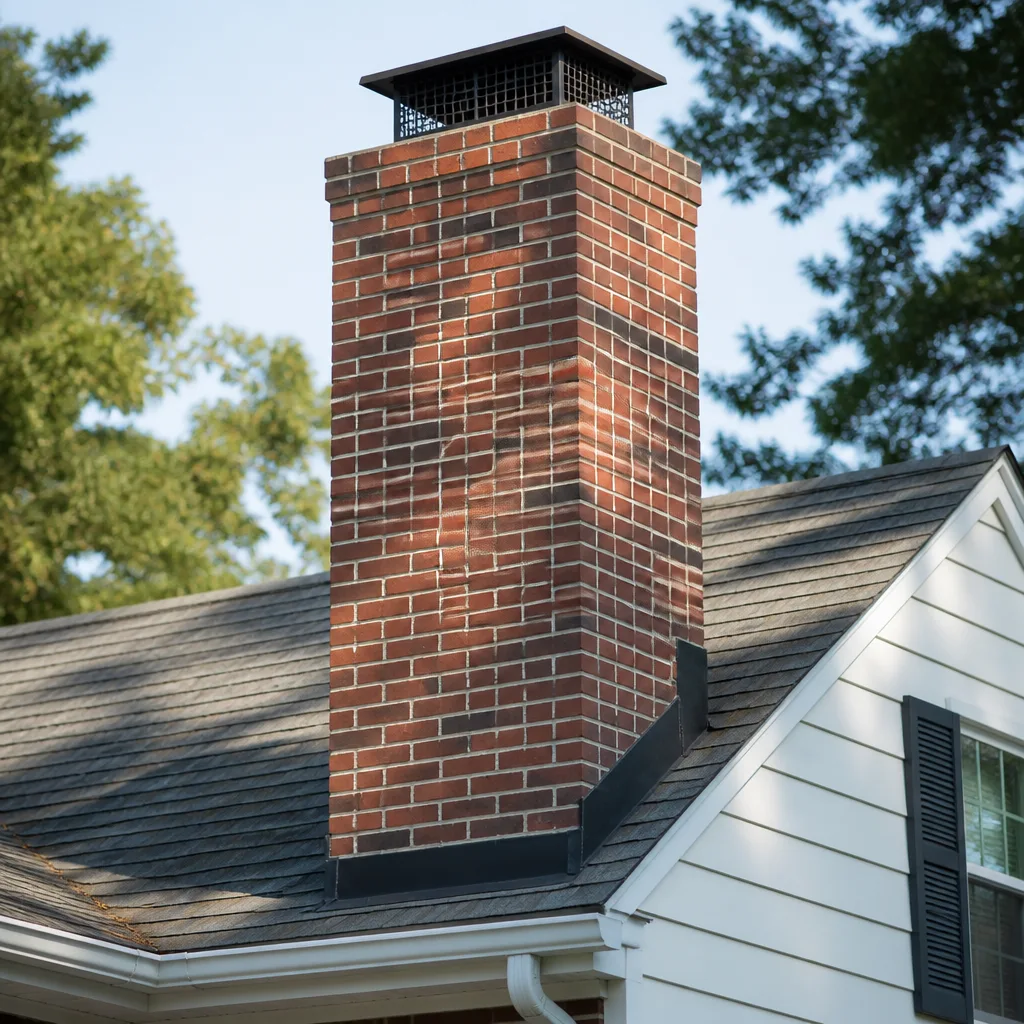
Abilene’s older brick chimneys – the ones built along streets near the Sayles Boulevard district and older homes throughout the central neighborhoods – are the ones we see most commonly showing freeze-thaw damage after a hard winter. The higher the masonry exposure, the more attention the post-winter walk earns.
The Invisible Parts: Cap, Crown, and Flashing
Most homeowners never look at the top of their chimney. That’s a mistake, because three components up there do the majority of the work of keeping water out of your chimney and house – and all three fail from outside, quietly.
The Cap
The chimney cap doesn’t look like much, but it does four jobs. It stops rain from falling straight down the flue, it keeps birds from nesting inside the liner, it stops sparks from landing on the roof, and it provides a place for a spark arrestor if your system uses one. A missing or damaged cap is a straightforward problem with a straightforward fix. We use Famco and Gelco product lines for properly fitted caps, covers, and venting components – these are the kind of parts where fit matters more than price.
The Crown
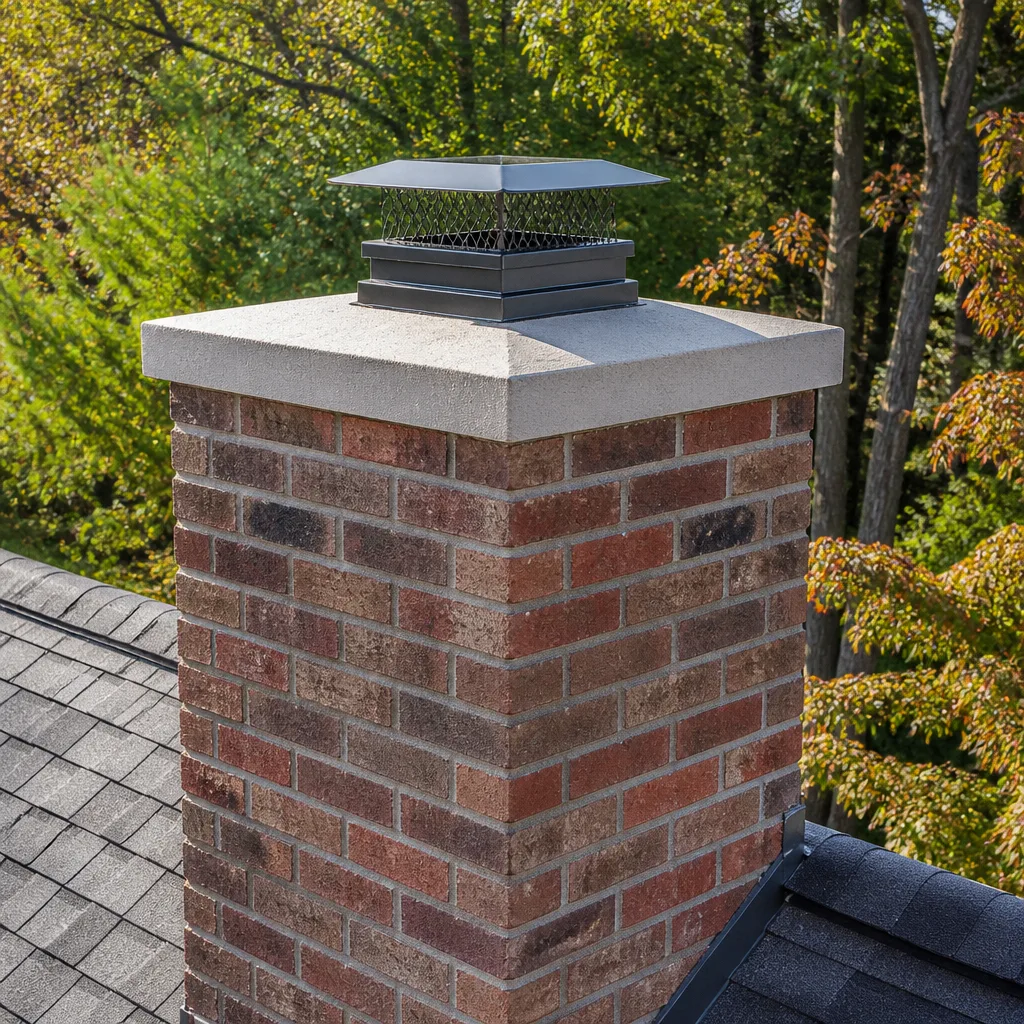
The crown is the concrete slab on top of the chimney that directs water away from the flue. When it develops a crack – and freeze-thaw is the leading cause in this climate – water runs down that crack into the masonry below. In a masonry chimney, wet brick and wet mortar decompose faster than dry ones. A crown repair done early is a modest job. The same area left for several years, with freeze-thaw hammering it every winter, becomes a serious structural problem.
Flashing
Flashing is the metal detail where your chimney meets the roof. When it lifts, fails, or rusts through, water finds a path into the attic and eventually into the ceiling below. Flashing issues don’t announce themselves. They show up as stains on the ceiling months after the actual leak started. Any chimney service should include a look at the flashing from the roof or from a camera above the roofline, and any finding should be explained in plain language with photographs.
These three – cap, crown, and flashing – are the items homeowners most consistently skip. They’re invisible from the living room, and if your sweep only runs a brush through the flue, they stay invisible. Ask specifically about all three at every inspection. That’s part of what we mean when we say a sweep without an inspection is a guess; the inspection is where these items get caught.
Age-Based Milestones: Chimneys Over 20 Years Old
A chimney that’s been through twenty or more Texas summers and winters has been through a lot. At that point, an annual inspection isn’t just good practice – it becomes the core of the schedule. Here’s what changes when a system crosses that line:
- The liner is the primary concern. Clay tile liners crack from thermal shock and freeze-thaw. Once cracks form, the liner no longer separates flue gases from the masonry around it, and moisture starts working into the brick. A camera inspection shows the condition of the liner in a way a mirror-on-a-rod can’t.
- Mortar joints inside the flue erode. Even a chimney that looks intact from outside can have failing joints inside. This is the kind of finding that a photograph from inside the flue documents in a way no verbal description can.
- Metal liners installed 15-20 years ago may be at the end of their life. Older aluminum liners used for gas appliances corrode. Stainless liners last longer, but joint seals at the top and bottom can loosen over time.
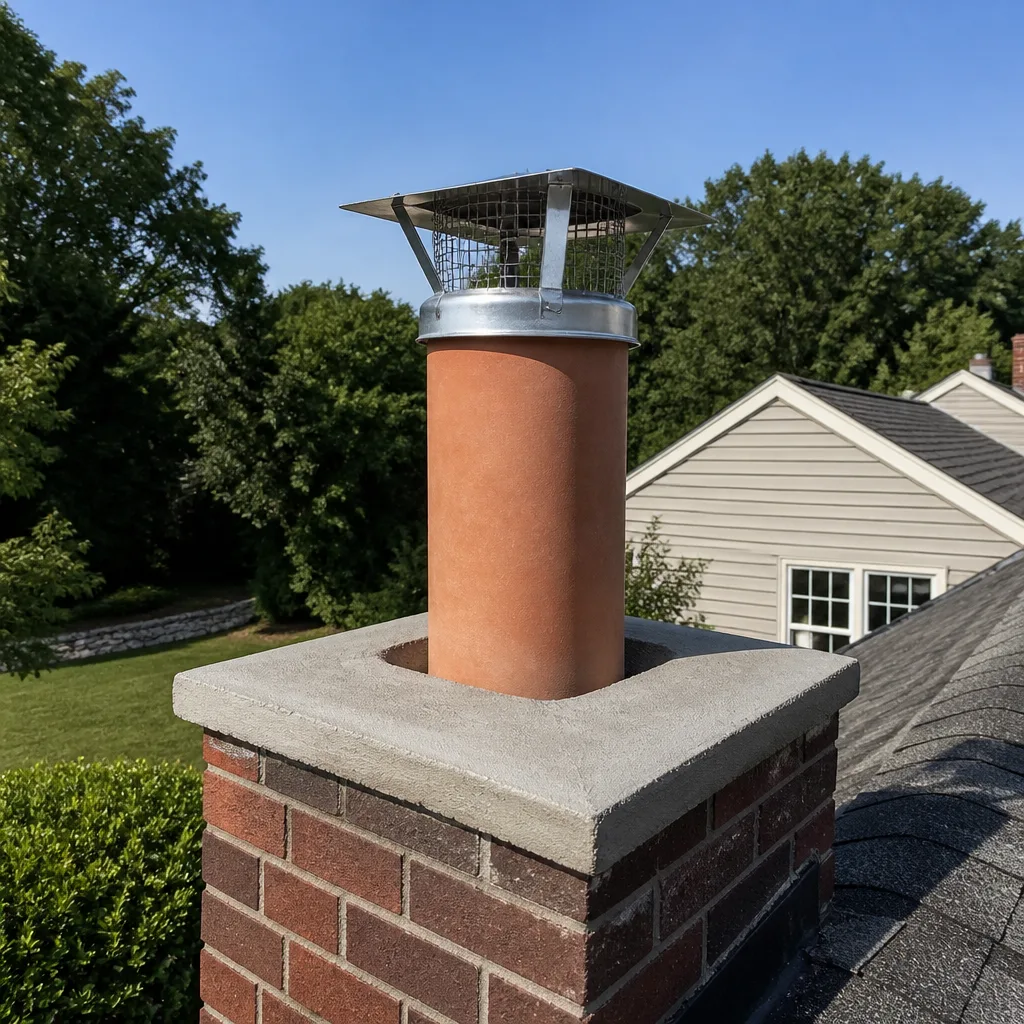
- Relining is often the answer when the liner has failed. A modern flexible liner – we install DuraFlex systems, which can handle offset and non-standard flue configurations that rigid liner can’t reach – is often a much better outcome than a masonry rebuild.
For older systems where the liner is aging but not fully failed, ceramic resurfacing is often an option. HeatShield ceramic resurfacing restores the interior surface of the flue without the cost and disruption of full relining. It’s a repair path that most sweep-only companies simply don’t offer, and it’s one of the reasons we work with a curated portfolio of professional-grade brands rather than whatever’s on hand at the local supply store.
If you own a home in Abilene that predates 2005, the age-based milestones on this list should be treated as baseline, not aspirational. Those are exactly the chimneys where the annual inspection earns its place.
Month-by-Month Reference Checklist
Here’s the month-by-month schedule. Print it, hand it to your chimney professional when they arrive, and check the items off as they’re done. The months are approximate – your burning season may start a little earlier or later – but the sequence is what matters.
September
- Confirm firewood is split and stacked; check moisture if possible.
- Schedule the pre-season sweep and inspection about two to four weeks out.
- Test the damper and confirm it moves freely.
October
- Complete the pre-season sweep.
- Complete the inspection with camera documentation.
- Address any findings from the inspection – cap, crown, flashing, liner.
- Confirm smoke and CO detectors are working.
November
- First fires of the season – watch for smoke backdraft or unusual smell.
- Monitor creosote buildup if you burn heavily (a mid-season sweep may be warranted in January for mesquite-heavy burners).
December
- Freeze-thaw window begins. Watch for new cracks in the crown and mortar.
- Check the cap from the ground after any windstorm.
January
- Mid-season sweep for heavy burners.
- Check the roof for flashed areas that may have lifted.
February
- Freeze-thaw damage is at its most visible now.
- Photograph any new exterior damage from the ground.
March
- Post-season inspection.
- Clean the firebox and ash pit.
- Close the damper and seal the flue.
April
- Address any findings from the post-season inspection – repair season starts.
- Repair or replace caps damaged by winter storms.
May
- Repointing or masonry repair if winter cracks were found.
- Crown repair if any cracking appeared.
June – August
- No urgent chimney tasks in the peak of summer; use this window for scheduled repair and liner work if needed.
- Re-check the exterior in late August as a bridge to the next pre-season.
That’s the framework. The single most important habit is to check in with a professional at least once per year, even if it’s just the inspection – because the schedule above assumes you know what’s discovered at each step.
Interior vs. Exterior Chimneys in West Texas Heat
One factor that rarely makes it into maintenance guides is whether your chimney runs through the interior of the house or along an exterior wall. Here in Abilene, that distinction matters more than people realize.
Exterior chimneys are exposed to the entire thermal cycle of a West Texas year. They hit 100+ degrees in the summer and 20s in the winter. The masonry absorbs and releases moisture on every cycle. Crowns crack faster. Mortar joints soften sooner. Flashing on an exterior chimney is on the roof edge where wind hits hardest.
Interior chimneys are shielded from summer extremes and protected from rain, but they’re not immune. The concern shifts to the interior of the flue – specifically, whether the clay liner maintains integrity at joints where heat and cool air meet. Interior chimneys also tend to run cooler on the flue side, which can accelerate creosote condensation in the upper third of the flue during shoulder-season fires.
For either type, an annual inspection is the only way to know whether the specific system you own is in good shape. The maintenance schedule above should be considered a starting point – and what a professional finds on your first inspection will almost always reveal whether you’re on a one-sweep or two-sweep schedule for your own home.
Styles & brands we work with
- Sweep & inspection
- Caps & crowns
- Flue relining
- Masonry repair
- Gas fireplace service
Common Mistakes to Avoid
- Skimming the exterior. Most homeowners look at the flue from the living room and assume it’s fine. The failure modes that matter – cracks in the crown, flashing, cap – live above the roofline. Any inspection that doesn’t clearly document those items is incomplete.
- Burning unseasoned wood to save a few weeks of drying. Wet wood burns cooler, produces more smoke, and leaves more creosote. It’s the single biggest factor in a flue that needs to be swept twice when it should only need it once.
- Treating annual sweep as sufficient. A sweep removes what’s there. It doesn’t assess the liner, the mortar, or the flashing. The sweep is a cleaning task; the inspection is a diagnostic task. They aren’t the same and they aren’t interchangeable.
- Ignoring small cracks in the crown. A hairline crack today is a freeze-thaw opening over the next winter. Crown repair is a modest job now and a serious one in a few seasons. Do the math on that.
- Assuming a fire has to “wait it out.” If you smell an unusual odor, notice discolored liner walls, or see smoke where smoke shouldn’t be, get it inspected before the next fire – regardless of when the last service was.
- Skipping the mid-season sweep after a heavy-burning year. Creosote glazes faster than people expect, especially with mesquite. If your flue was close to needing a sweep in the pre-season, plan for a second one in January.
- Hiring a sweep who doesn’t repair. Half the point of an inspection is doing something with the findings. If your sweep reports a cracked crown and refers you elsewhere, you’ll need to start over with a second company. One team that handles the sweep, inspection, and fix makes the whole schedule simpler.
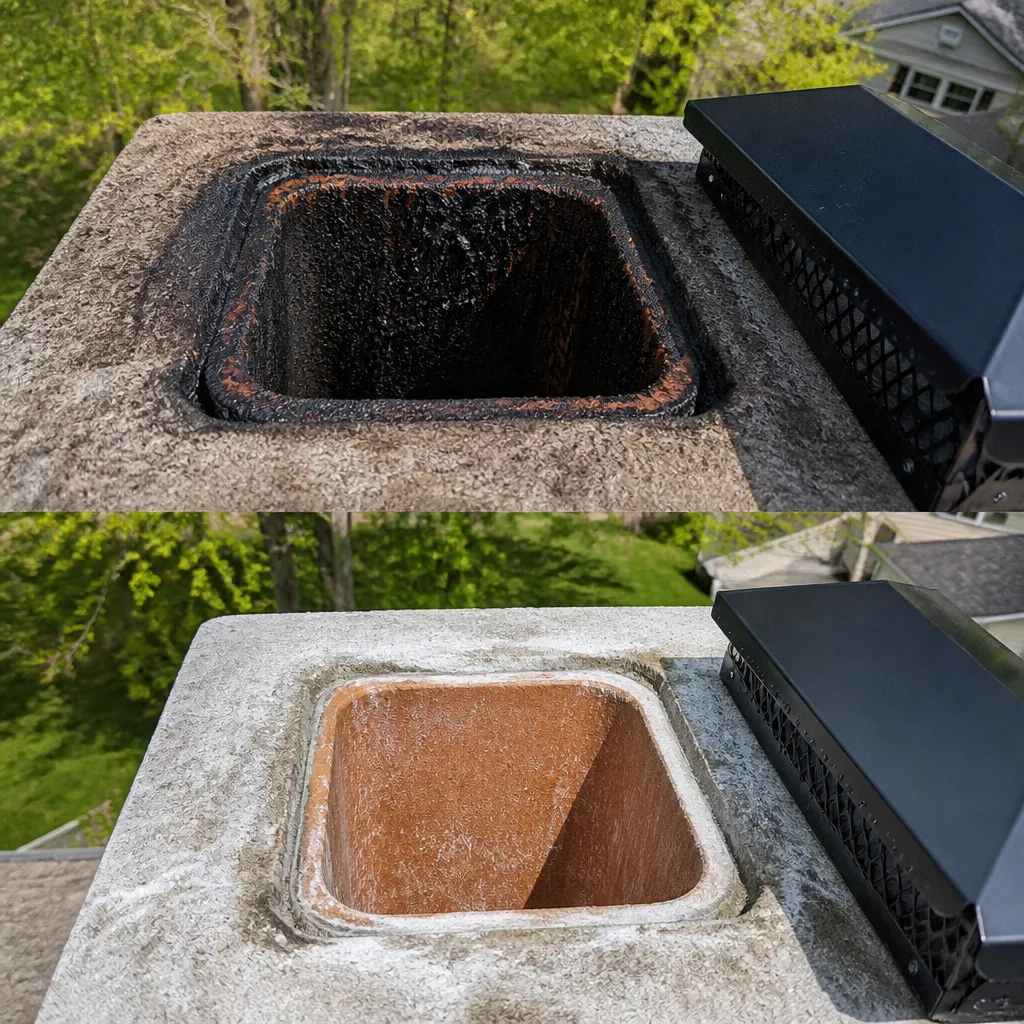
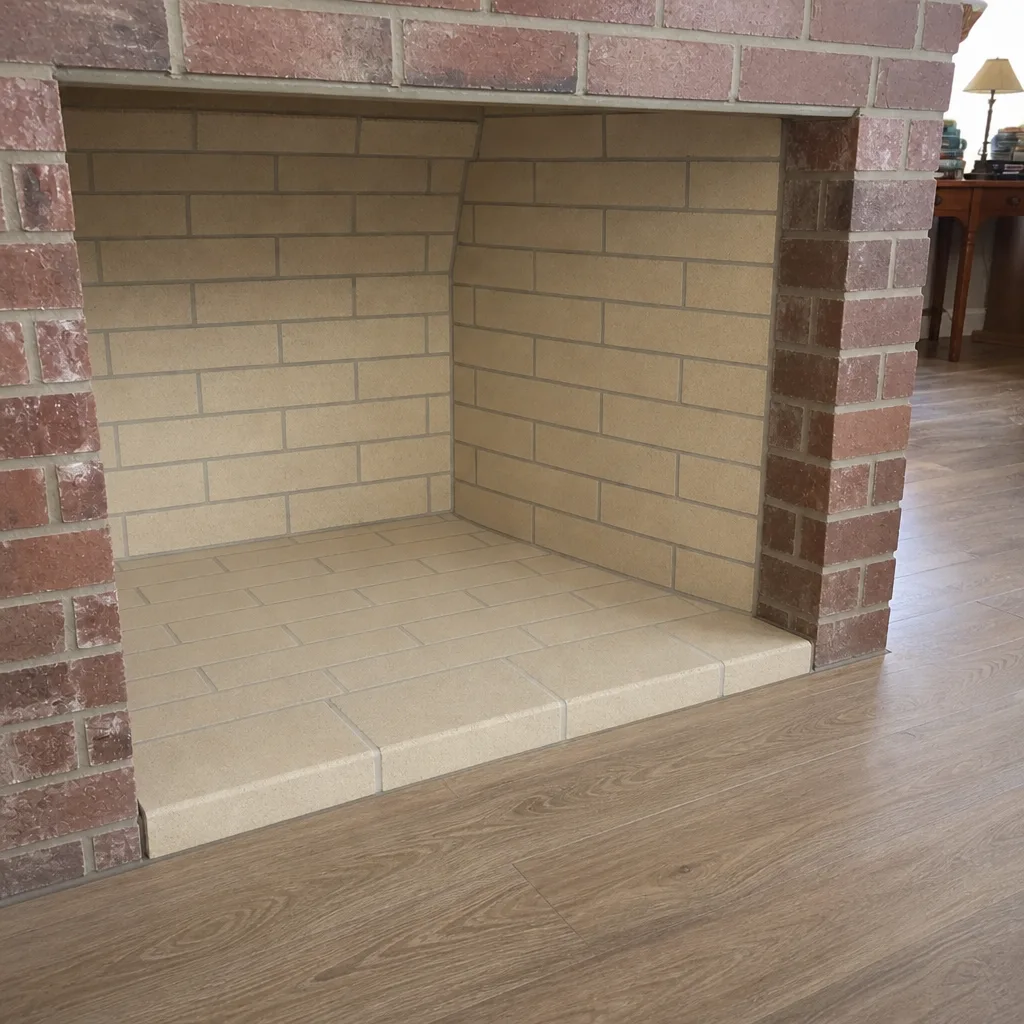
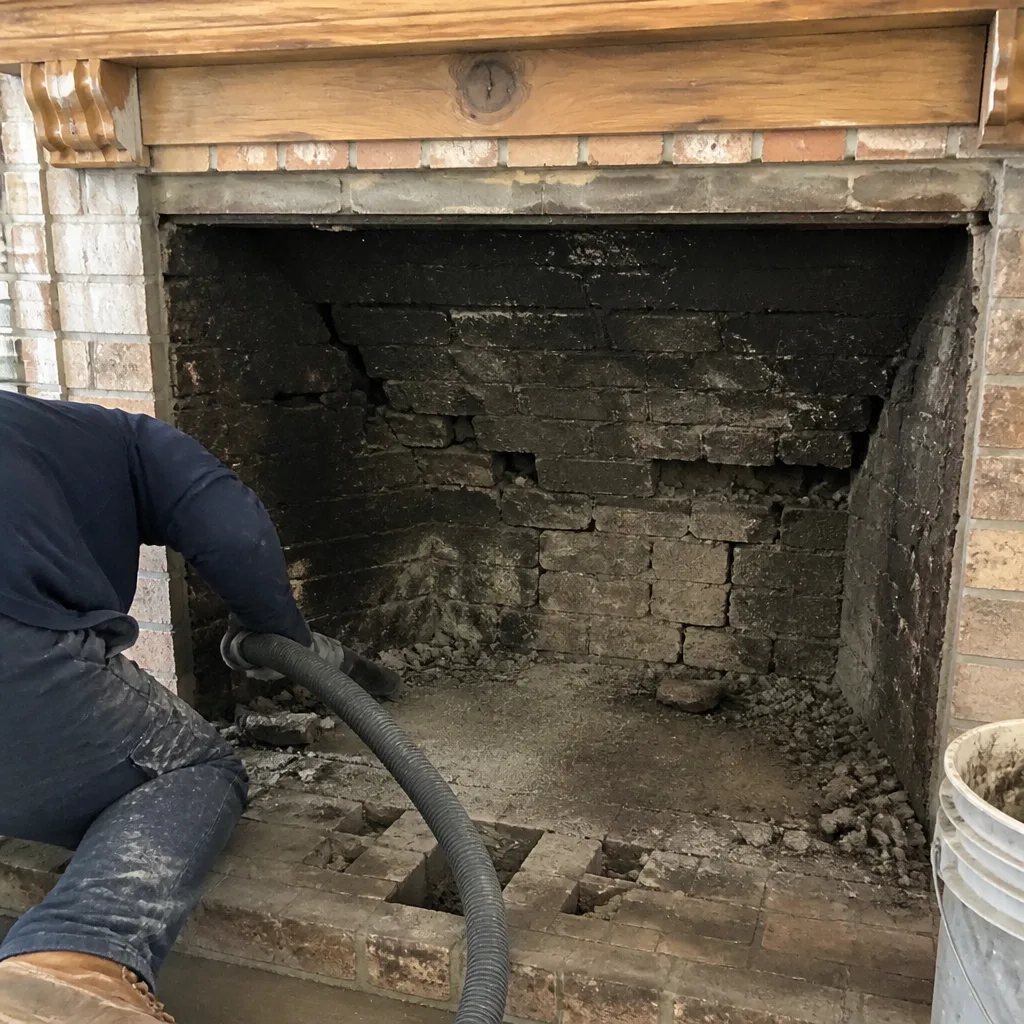
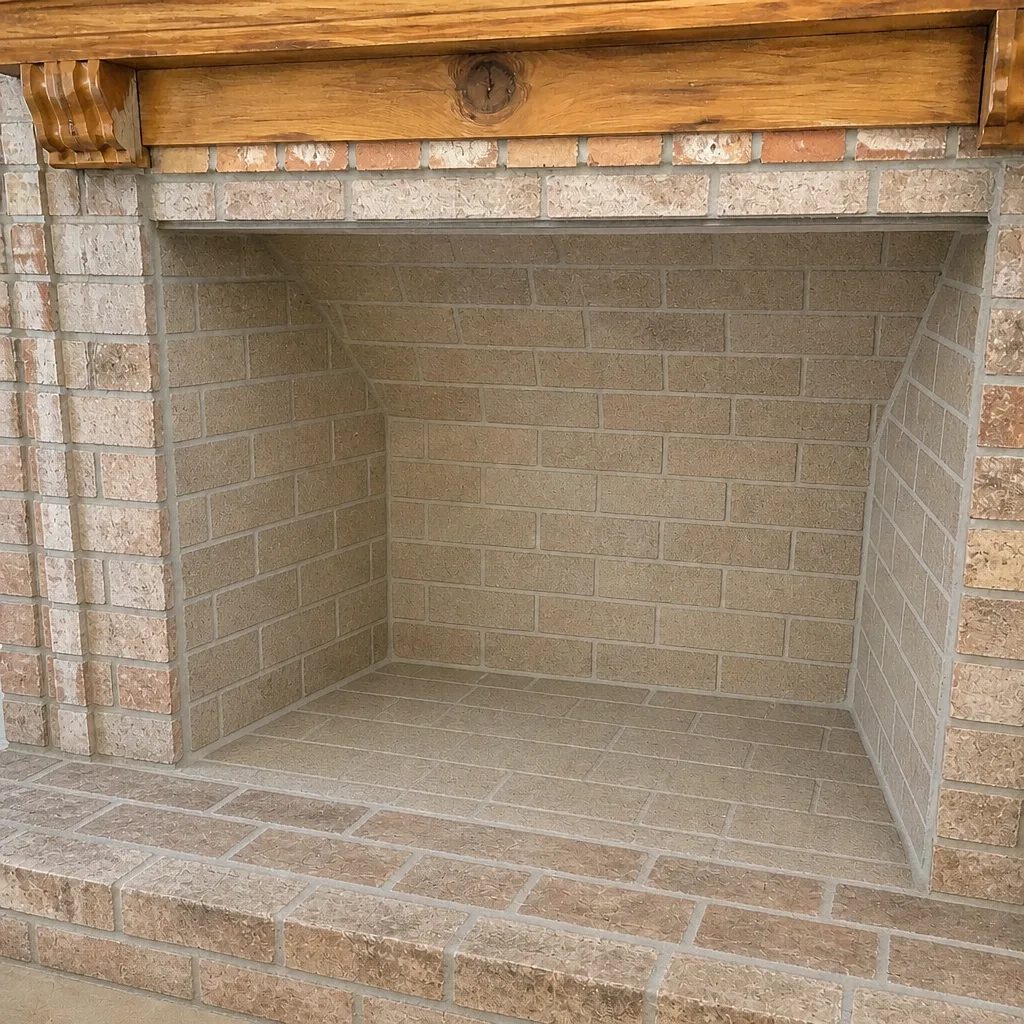
See the difference
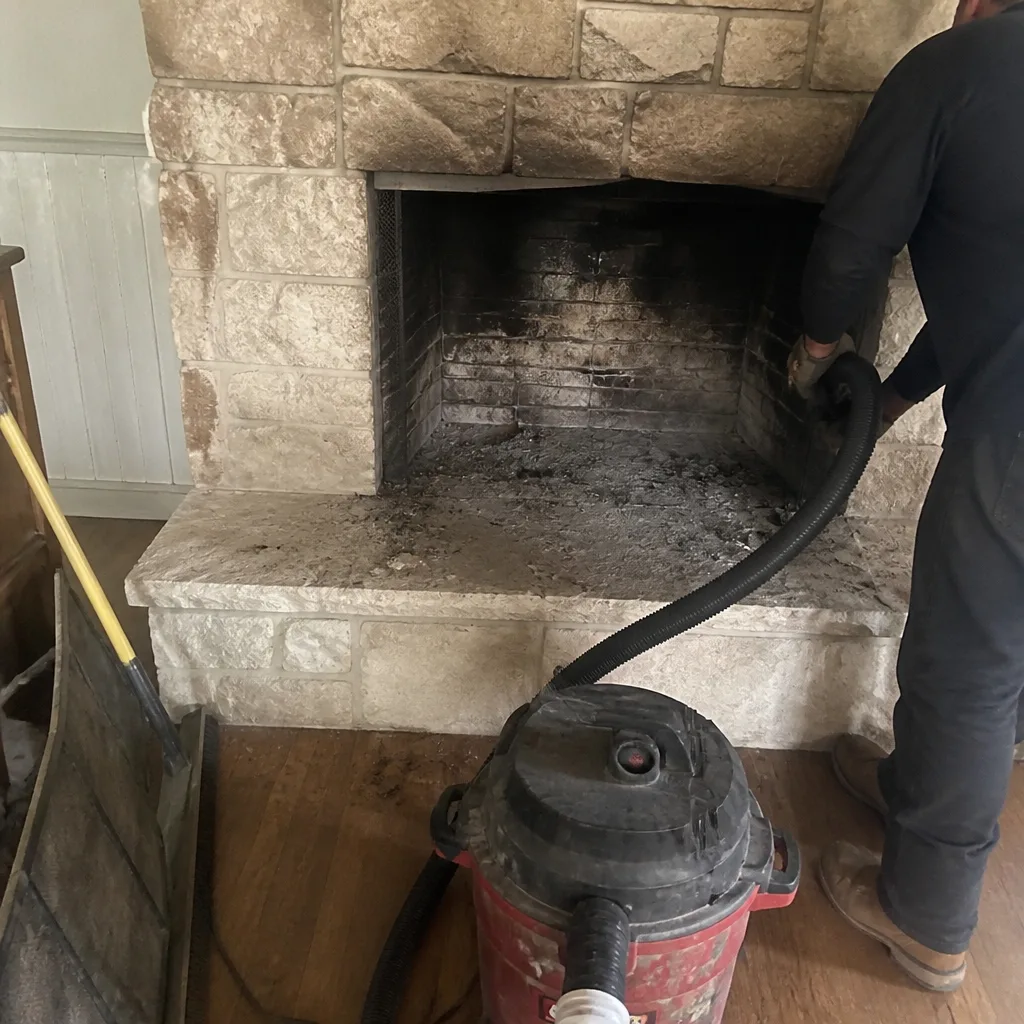 Before
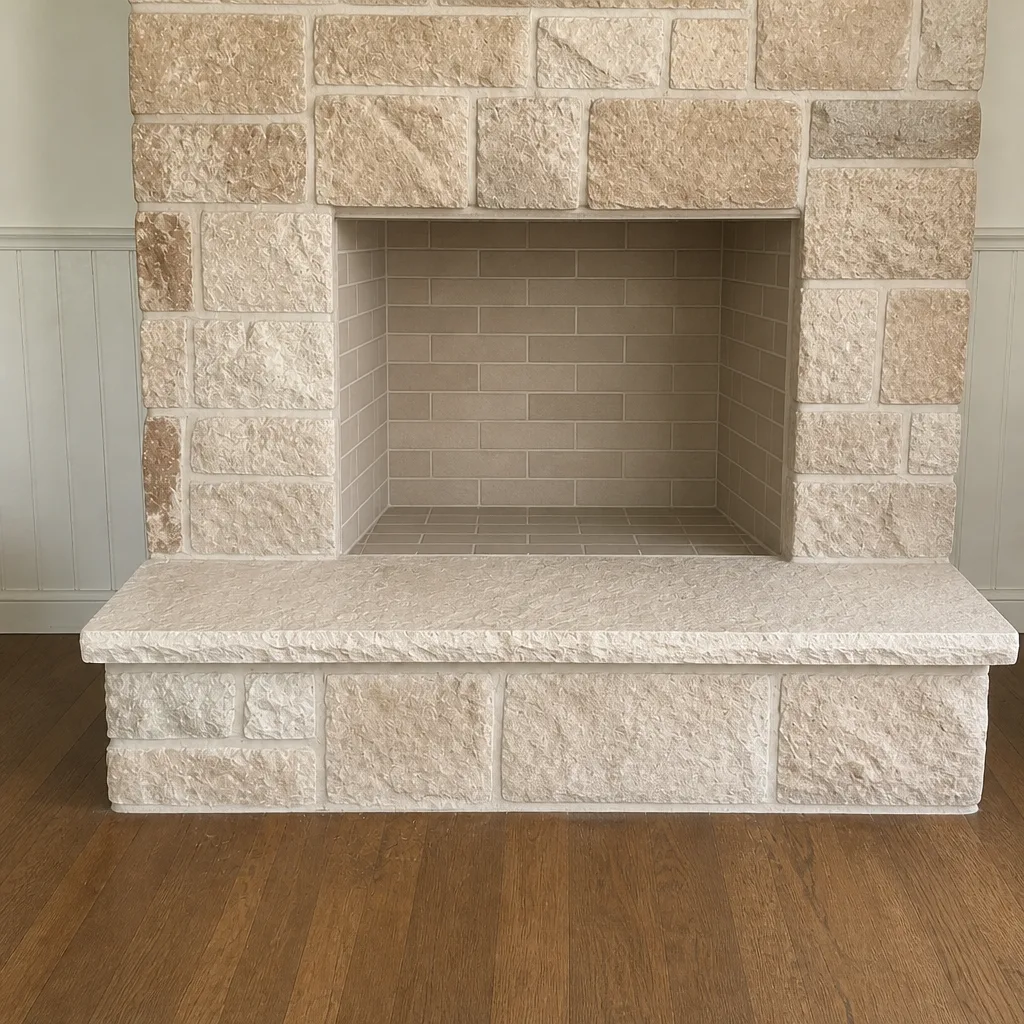 After
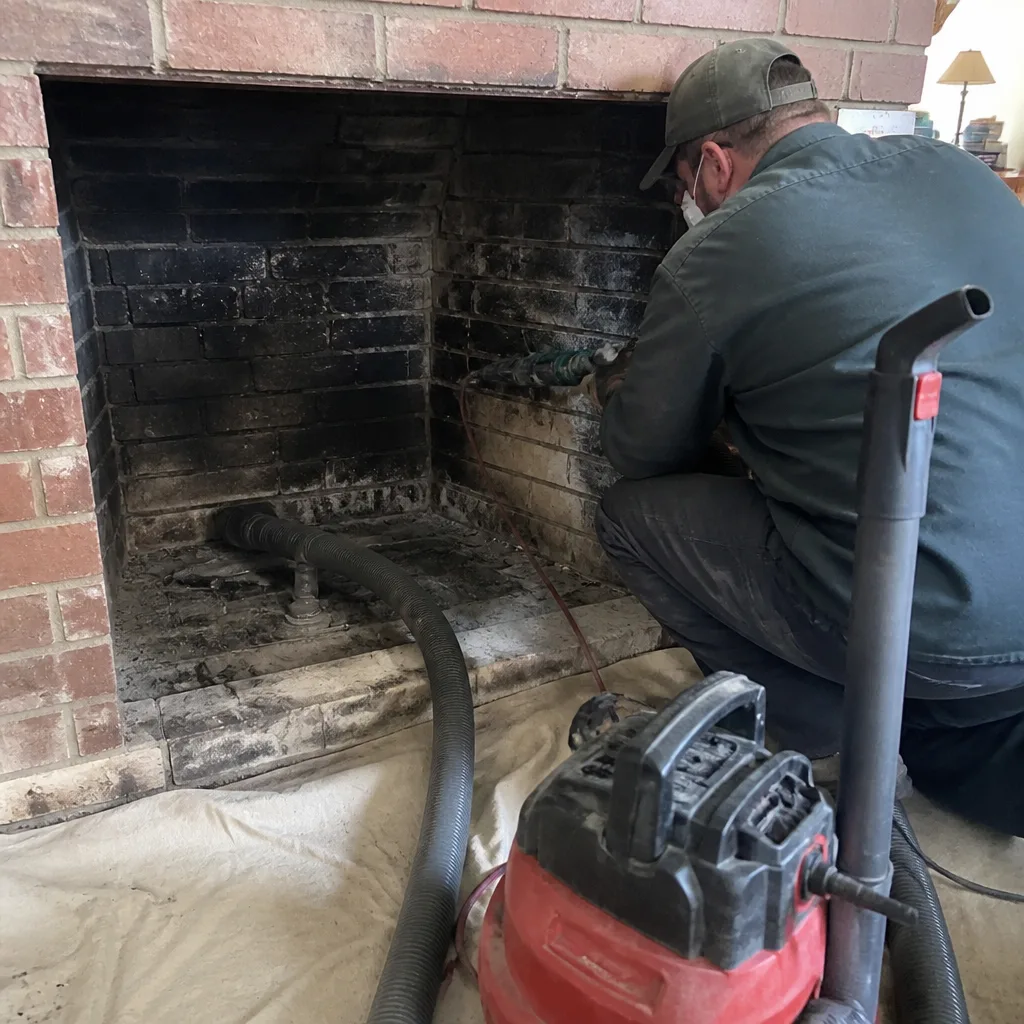 Before
 After
 Before
 After
When to Call a Professional
Some chimney tasks are safe to handle yourself, and the standard list is short: stack firewood properly, test the damper, check your smoke and CO detectors, walk the exterior from the ground. Everything else on this guide’s schedule wants a professional. High-tension work, roof access, camera inspections, liner repairs, crown repair, and any firebox work beyond minor cleaning all carry real risk to a homeowner and real risk to the system if done wrong.
The safe scenarios for calling:
- You’ve burned this season and can’t remember the last service.
- You smell an unusual odor from the fireplace, especially when it’s not lit.
- You see smoke coming from anywhere other than the top of the chimney.
- You’re buying a home in Abilene with a wood-burning system and don’t have a recent inspection on record.
- You’ve had a chimney fire, a lightning strike near the house, or a storm that displaced the cap.
- Your system is 20 years old or more, even if you’ve burned lightly.
For the systems in Abilene, the best time to get on the schedule is before the rush of a cold snap. Chimney Sweep Abilene offers free estimates – call (888) 359-2615. We answer 24/7. Fast dispatch from 7am to 7pm, Sunday through Friday.
Frequently Asked Questions
Most wood-burning households need one sweep and inspection before the season and a visual check after it. If you burn more than a cord of mesquite or cedar a season, or if your flue builds creosote quickly, plan on a mid-season sweep as well. The real answer depends on how much you burn, not the calendar. Call (888) 359-2615 for an exact quote – estimates are free.
Not always. A liner needs replacement when the existing one has clearly failed – visible cracks in clay tile, corrosion in an old metal liner, or separation at joints that weakens the separation between flue gas and surrounding masonry. Sometimes ceramic resurfacing is enough to extend the life of a liner without replacement. What we won’t do is recommend relining based on a hunch. Every recommendation comes with camera evidence you can see for yourself, and if the liner is safe to keep, we’ll say so. Call (888) 359-2615 for an exact quote – estimates are free.
Problems that would have been caught while they were small get caught later, when they’re larger and more expensive to fix. Cracks in the crown that could be repaired in an afternoon become moisture pathways that ruin masonry. A liner with hairline cracks becomes a liner with through-cracks. None of this is catastrophizing – it’s simple weathering, which is why the NFPA standard calls for annual inspection. Call (888) 359-2615 for an exact quote – estimates are free.
Yes, in this climate. Mesquite burns hot and produces a lot of volatile compounds that condense in the cooler upper flue. Compared with oak or pecan – which need longer to season but produce less creosote per cord when dry – mesquite-heavy burning tends to build up faster. That’s why mesquite burners benefit from a mid-season sweep alongside the pre-season one.
Pricing depends on the type of chimney, the amount of buildup, and whether it’s paired with an inspection. We don’t quote ranges over the phone for a job we haven’t seen. Instead, we set price per job by written estimate – you’ll know the cost before any work begins, and the estimate is free. Call (888) 359-2615 for an exact quote – estimates are free.
A sweep removes soot and creosote from the flue. An inspection evaluates the condition of the flue, liner, firebox, and cap, and typically includes a camera view of the interior. A sweep without an inspection is a guess – it tells you the flue is cleaner than it was, not whether the system above the brush is in good condition. We do both on the same visit. Call (888) 359-2615 for an exact quote – estimates are free.
The Bottom Line
An annual sweep is the minimum, not the whole schedule. Build your maintenance around four triggers: how much you burn, the calendar (pre-season and post-season), events like a chimney fire or storm, and the age of the system. Mesquite and cedar need more frequent attention than oak. Freeze-thaw between December and February is when masonry damage accumulates fastest, so the post-winter inspection is not a formality. Cap, crown, and flashing deserve as much attention as the flue itself – they’re the parts most likely to fail and least likely to be checked. When you’re ready to schedule, one team that handles the sweep, the inspection, and the fix makes the whole thing simpler. If you’re ready to get on the schedule, start with a Chimney Sweep Abilene visit.
For any part of this schedule – pre-season, mid-season, post-season, or a specific problem you’ve noticed – call us for a free estimate. Chimney Sweep Abilene offers chimney sweep, chimney inspection, and chimney repair across the Abilene area. We answer 24/7. Fast dispatch from 7am to 7pm, Sunday through Friday. Call (888) 359-2615 to get on the schedule.
Written by the team at Chimney Sweep Abilene.