
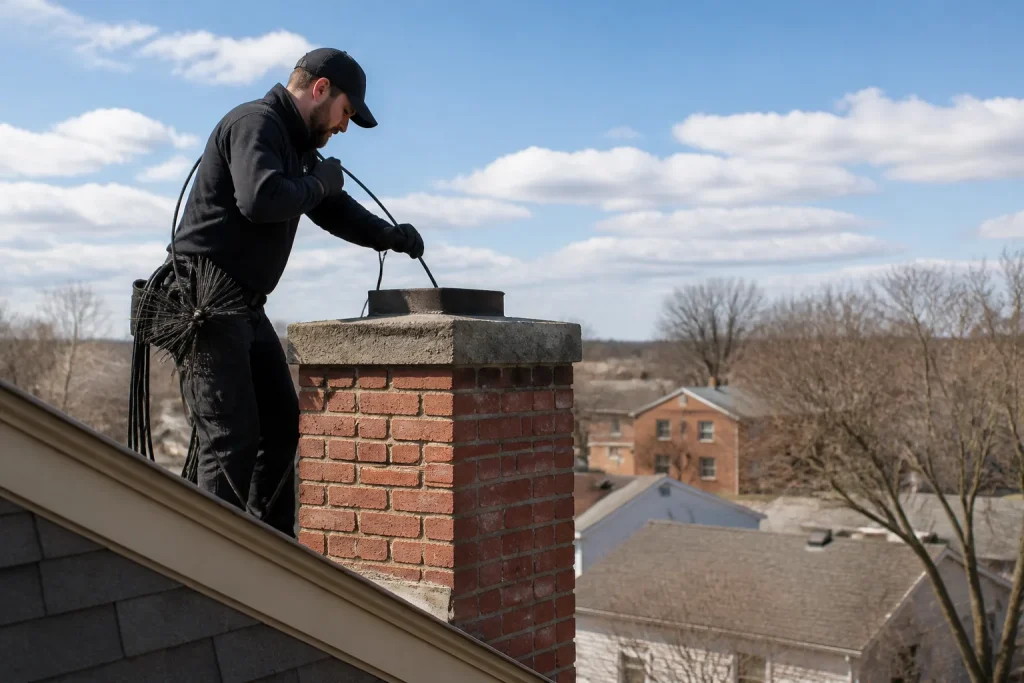
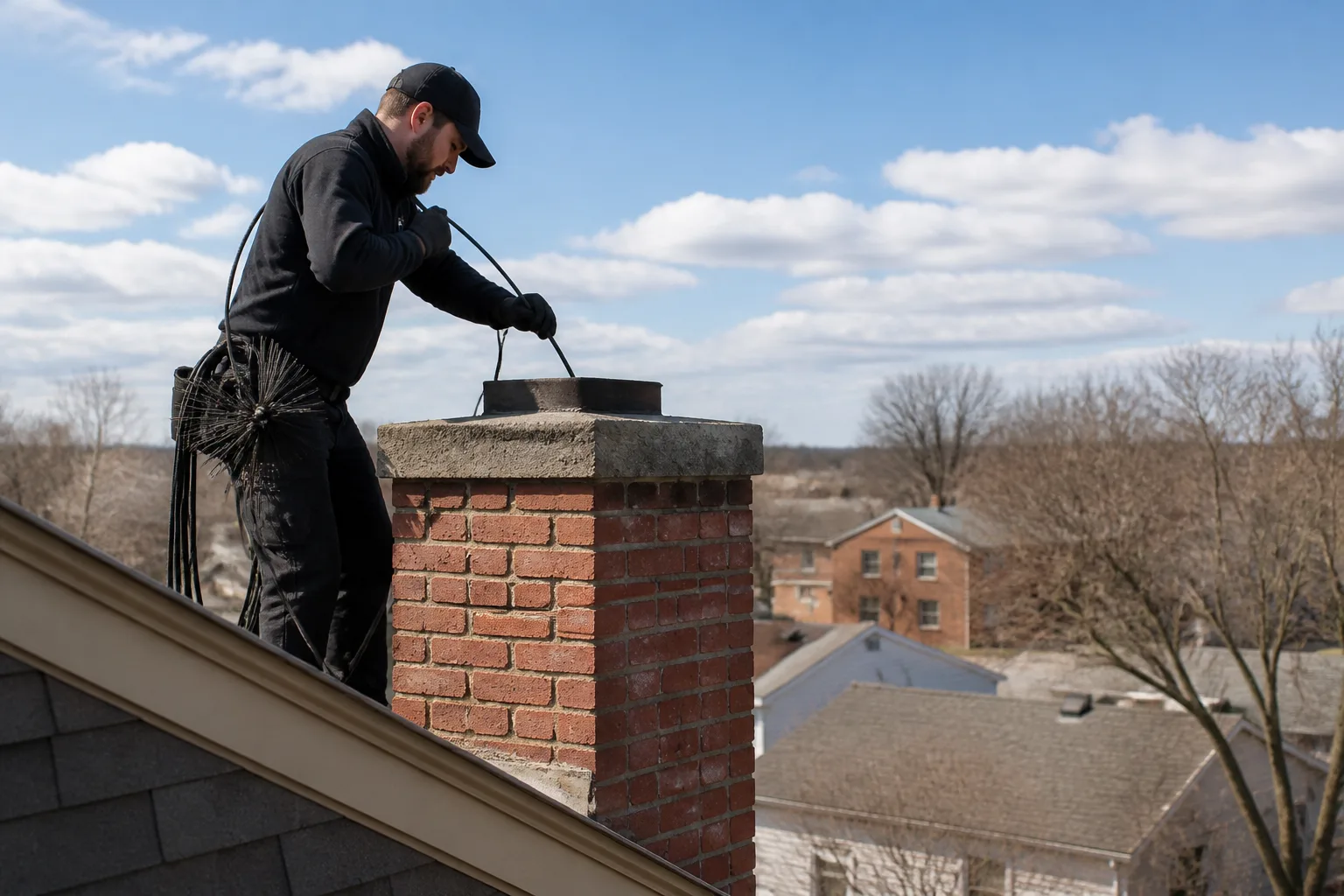
Emergency Chimney Sweep Near Me: What Abilene Homeowners Should Do First
If there’s fire coming out of the top of your chimney, smoke rolling into the room, or masonry that’s visibly moving, you have an emergency and the first call is to 911, not to a sweep. If you smell creosote when it’s damp out or your chimney hasn’t been cleaned in a while, that’s urgent but not an emergency, and it can wait for a booked appointment. Most people searching “emergency chimney sweep near me” in Abilene that night are in one of those two situations, and the difference matters more than which company shows up.
Here’s the direct answer: for an active chimney fire, call the fire department first and evacuate if smoke is in the house. Then call (888) 359-2615. We answer 24/7. Fast dispatch from 7am to 7pm, Sunday through Friday. If you’d rather not sort out the difference yourself, call us and we’ll help you decide.
Key Takeaways
- An active chimney fire means 911 first, sweep second. Fire department response comes before inspection or cleaning.
- Smoke smell, dirty glass, or an overdue sweeping are urgent, not emergencies – those get booked, not rushed.
- Never put water on a chimney fire. It can crack a hot flue or flash into steam and push pressure back into the room.
- Any chimney fire needs a camera inspection before the fireplace is used again. A standard sweep won’t tell you whether the liner survived.
- Ask for the inspection documentation in writing. Your insurer will want it.
What actually counts as a chimney emergency?
A chimney emergency is an active fire in or around the flue, smoke or fire entering the living space, or a structural failure of the chimney itself. Anything else is urgent-at-most. A chimney fire burns extremely hot and can spread to roof framing quickly, which is why the sequence of who you call first matters so much.
Between the two categories there’s a lot of grey area, so here’s how we sort it in practice:
- Call 911 now: roaring sound like a freight train from the flue, flames or sparks visible at the top, smoke filling the room, creosote burning on the roof, or chimney masonry visibly cracked, leaning, or dropping pieces.
- Call us and book it: heavy creosote smell, soot falling into the firebox, smoke rolling back into the room on start-up, a damaged or missing cap, water staining on the chimney breast, a dead bird or nest in the flue, or a fireplace that hasn’t been swept in a long while.
- Note it and keep going: a little smoke on a cold start, soot dust on the hearth after a windy week, or a slight draft that’s always been there.
Wildfires burning in the hills west and south of Abilene put a fine grit in the air that settles on caps and roof surfaces, and a failing cap in that grit takes on wear faster than people expect. If a windstorm has knocked your cap loose, that belongs in the middle category, not the top one. Book it and get it looked at.
What should you do in the first thirty minutes of a chimney fire?
Get people out, call 911, and shut the damper if you can do it safely without getting near flames or smoke. Do not throw water on the fire. Do not keep burning. Do not wait to see if it goes out on its own. Here’s the full sequence we want every Abilene homeowner to have memorized before they need it:
- Get everyone out of the house if there’s smoke or fire visible inside. Household safety first, possessions never.
- Call 911. Report a chimney fire. Say what you can see and hear – flames at the top, roaring sound, or smoke in the room.
- Close the damper only if you can reach it without entering a smoke-filled room. That cuts the air feeding the fire.
- Close the firebox doors if you have glass doors. This keeps embers from spilling onto the hearth.
- Don’t put water or anything else down the flue. A sudden cold shock can crack a hot flue liner, and steam drives pressure into the room.
- Stay outside and let the fire department finish. Even after the flames stop, the structure stays very hot for a while.
- Call us once the fire department clears the scene. (888) 359-2615. We answer 24/7 and can book the post-fire inspection. Fast dispatch from 7am to 7pm, Sunday through Friday.
The number of people who reach for a phone to search for a sweep before they reach for 911 to report a fire is higher than you’d think. It’s not a judgment – it’s the way urgency scrambles priorities. This is the order that works.
Why isn’t a standard sweep enough after a chimney fire?
A standard sweep cleans the flue. A post-fire inspection determines whether the flue is still safe to use, and the only way to answer that is with a camera. Heat from a chimney fire can crack clay tiles, warp a metal liner, or weaken mortar joints in ways that aren’t visible from the firebox or the roof. A sweep that removes soot can leave behind a damaged liner that looks fine.
What a proper post-fire inspection should include:
- A camera run of the full flue from the firebox to the top, with images you can look at on the spot.
- A check of the liner joints for cracks, open gaps, warping, or separation.
- A look at the smoke chamber – the sloped space above the damper where heat stress often shows first.
- A crown, cap, and masonry check from the roof, looking for cracks, spalling, or displaced brick.
- A written report with photos that segments the flue and describes what was found, section by section.
When a liner has suffered localized damage, we can often restore it instead of replacing the whole system – HeatShield ceramic resurfacing is designed for exactly that case, sealing cracks and rebuilding a smooth flue surface without the cost and disruption of full relining. Where the damage is worse, or the flue has an offset a rigid liner can’t pass, we fit a DuraFlex flexible liner that navigates the bends. The point is that the inspection decides which of those paths you’re on. Without the camera images first, any recommendation is a guess.
What Abilene-specific problems should you watch for?
Abilene’s cottonwood fluff, dust storms, and spring hail put chimney caps through a lot. When a cap fails during a high-wind storm, rain and debris get straight into the flue, and raccoons or birds follow. That’s the most common structural issue we see in Abilene, and a properly fitted cap from a line like Famco or Copperfield prevents it before it starts.
The second pattern is more subtle. Abilene’s sudden cold snaps – a warm afternoon dropping into freezing temperatures overnight – send cold air down a warm flue, condensing creosote vapor onto the cooler walls. That glazed, shiny creosote burns very hot, and it’s the type that starts chimney fires. It doesn’t look like a problem from the outside. It accumulates on its own schedule.
The third is soil. The expansive clay under much of Abilene swells when wet and shrinks when dry, and masonry chimneys aren’t anchored to a foundation the way the house is – they sit on their own footing, and that footing moves with the soil. Over a few wet-dry cycles, hairline cracks open at the crown and shoulder of the chimney, water gets in, and cracks widen through the next cold snap. It’s slow, but it’s real. A chimney that leans feels like a serious issue and sometimes is – but many are a small crack that got wet. The camera and a hands-on look tell you which.
What documentation should you request for a homeowner’s insurance claim?
After a chimney fire, ask for the inspection report in writing – not just a verbal summary and a picture on a phone. Most insurers, when a claim is filed, want a document they can attach to the file. A proper post-fire report from a chimney professional should include:
- The date of the inspection and the address of the property.
- Photos of the flue, smoke chamber, cap, crown, and any masonry showing damage.
- A description of the damage by section, in plain language.
- A statement of whether the chimney is currently safe to use, and what would make it safe.
- A recommendation for repair, in writing, before work begins.
Ask your insurer what they want before the inspection, so the report covers it in one pass. Keep a copy of your fire department report as well – the two documents together describe what happened and what it cost to fix. A sweep-only crew usually can’t produce this, because the inspection is the part they don’t do.
When to call a pro
Call us if you’ve had any fire in the flue, even one that went out on its own. Call if the cap is gone, the crown is cracked, or you can see damaged brick from the ground. Call if you can’t remember the last sweep. And call if your insurer wants documentation – we can provide the camera inspection and a written report that matches what they’ll ask for. We also handle chimney repair in the same visit, so a problem found on the camera can usually be addressed without a second appointment and a second contractor. One company, one report, no gap between findings and fix.
If you’re comparing options in Abilene, the questions to ask are straightforward: do they run a camera on every inspection, do they give you photos you can see on the spot, and do they repair what they find or send you elsewhere? A sweep without an inspection is a guess. Those three questions separate a chimney service from a sweep-only crew.
If you’d rather not DIY any of the above (and on a live chimney fire, you shouldn’t try), call (888) 359-2615. We answer 24/7. Fast dispatch from 7am to 7pm, Sunday through Friday.
Related services in Abilene: a professional chimney sweep covers routine cleaning, and the post-fire inspection is part of our full picture of how a chimney in Abilene actually performs through our storms, cold snaps, and clay. Both services run through one company, which is what you want when the inspection turns up something that needs fixing. For the wider picture of what we do, start at Chimney Sweep Abilene.
The Bottom Line
On an active chimney fire, 911 comes first and the sweep comes second. On everything else – smell, smoke, a missing cap, a chimney you’re not sure about – book an inspection and sleep better. The single most useful thing you can ask any sweep for is camera evidence. If they can’t show you the inside of your own flue, they can’t tell you what’s wrong with it, and neither can you.
Our technicians have up to experience, we work with professional-grade liner and component lines, and we handle the sweep, the inspection, and the repair under one roof. If you’re in Abilene and need help, Chimney Sweep Abilene offers free estimates – call (888) 359-2615. We answer 24/7. Fast dispatch from 7am to 7pm, Sunday through Friday.
Frequently Asked Questions
Yes, treat it as one until the fire department has cleared the scene and a camera inspection confirms the flue is intact. Even a quickly-extinguished fire can crack clay tiles or warp a liner, and those defects aren’t visible from the firebox. Use the chimney only after the inspection report says it’s safe. Call (888) 359-2615 to book that inspection – the estimate is free.
Common signs are a loud roaring or popping sound from the flue, soot flakes on the hearth or roof, heat-discolored or warped caps, and damaged or stained masonry near the top. Creosote that looks puffy, honeycombed, or glazed is a strong warning sign even without a fire. If any of that matches what you’re seeing, book a camera inspection before the next fire – call (888) 359-2615 for an exact quote, and estimates are free.
Most cities require a permit for structural chimney repair, so check with the city’s building department before work begins; our written estimate lays out the scope so you know what’s being permitted. Cosmetic work and routine sweeping usually don’t need one. Call (888) 359-2615 and we’ll talk through what your job will need.
No. Once a fire has run, the liner and smoke chamber need to be checked before anything touches them, because cleaning can dislodge broken tile or warped metal that’s still holding position. What you can do yourself is check that the cap is secure, sweep soot off the hearth, and keep the next fire small. For the inspection, call (888) 359-2615. The estimate is free.
Written by the team at Chimney Sweep Abilene.
Need Chimney Cleaning Help?
Call Chimney Sweep Abilene - licensed & insured, with free written estimates in Abilene.
(888) 359-2615